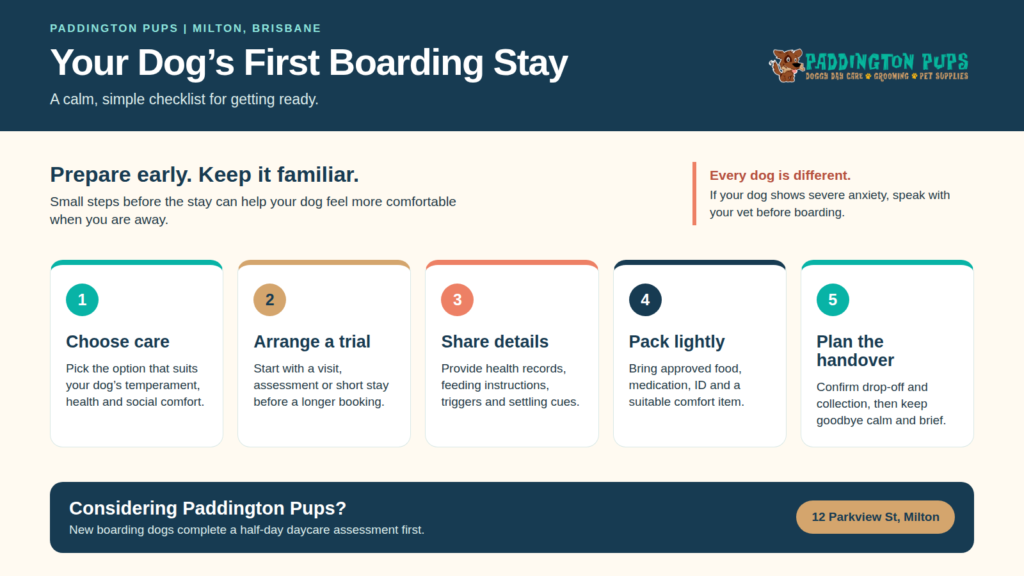
To prepare a nervous dog for its first boarding stay, make the experience familiar before you travel. A short trial, a clear routine, honest information about your dog and a calm handover can all help your dog feel more settled.
It is also important to be realistic. Some dogs need more support than a standard boarding stay can provide. If your dog panics when separated, is frightened of unfamiliar people or dogs, or has a health concern that affects their behaviour, speak with your vet before making a booking.
What Makes a First Boarding Stay Difficult for a Nervous Dog?
A first stay can involve several changes at once. Your dog may be away from you, sleeping somewhere unfamiliar, meeting new people, following a different routine and sharing space with other dogs.
Nervous dogs do not all show stress in the same way. Some bark, pace or try to escape. Others become very quiet, hide, freeze, avoid food or keep their body tense. Tell the boarding team what your dog normally does when they are worried, because subtle signs can be easy to miss in a new environment.
A nervous dog is not being difficult. They are telling you that the situation feels unfamiliar or too challenging. Preparation should make the change smaller and slower, not force your dog to cope before they are ready.
How Do I Prepare a Nervous Dog for Its First Boarding Stay?
Start early, arrange a trial, practise short separations and give the boarding team clear information about your dog’s routine and behaviour. The goal is not to make your dog love every new situation immediately, but to give them a manageable introduction and suitable support.
Start With the Right Boarding Arrangement
Before you book, think about whether boarding is the right type of care for your dog. Some dogs settle well in a supervised facility. Others may be more comfortable staying at home with a trusted sitter or in a quieter home-based arrangement.
Consider your dog’s usual behaviour around:
- unfamiliar people;
- other dogs;
- new buildings and sounds;
- being handled by someone else;
- sleeping away from home;
- changes to meals and toileting;
- short periods without you.
A boarding provider should be willing to discuss these details before accepting your dog. Ask how dogs are grouped, where they rest, what happens when a dog needs space and how the team responds if a dog is not coping.
If you are still deciding between a facility and care at home, our dog boarding versus pet sitting comparison can help you think through your dog’s temperament, health needs and comfort with different environments.
Give Yourself Time for a Trial Stay
A trial is one of the most useful ways to prepare a nervous dog for its first boarding stay. It lets your dog experience the people, smells and routine before you are already away on a trip.
At Paddington Pups in Milton, every new boarding dog completes at least a half day of daycare before their first overnight booking. This first visit gives the team a chance to see how your dog responds to the group environment, and it gives you useful information before you commit to a longer stay.
A daycare trial is not a promise that every dog will enjoy boarding. It is a chance to see whether the environment is a suitable fit and what your dog may need during the stay.
If your dog is accepted for boarding, you can still ask whether a shorter first booking would be more suitable than starting with a long holiday. The VCA guidance on boarding dogs also recommends visiting the facility and considering short stays to help a dog become accustomed to the environment.
If your dog has not attended daycare before, our first-day daycare guide explains what to expect from the first visit and how a gradual introduction can support a smoother start.
Practise Short Separations at Home
If your dog is nervous whenever you leave, practise small, manageable separations before boarding. Start with a length of time your dog can handle without becoming distressed, then build gradually rather than jumping straight to a full day or overnight stay.
Keep departures and returns calm. You can also practise small parts of your leaving routine, such as picking up your keys or putting on your shoes, without always leaving the house. This may help reduce the meaning your dog attaches to those signals.
Use only activities your dog already enjoys, such as a safe food toy, sniffing game or settled rest area. Do not introduce several new things at once, and do not leave your dog with an item that could be unsafe or unsuitable without supervision.
Keep Your Dog’s Routine Familiar
You cannot copy your entire home routine in a boarding facility, but you can make the important parts clear. Write down when your dog eats, how much they receive, what treats they can have, when they normally toilet and how they settle for sleep.
Try to keep the days before boarding predictable. Continue your dog’s usual walks, sniffing time, meals and rest. Avoid tiring your dog out with an unusually intense day immediately before drop-off, because arriving overtired can make it harder for them to cope.
If your dog follows a special diet or is a fussy eater, tell the provider early. Paddington Pups feeds boarding dogs twice a day, and owners can discuss bringing their dog’s own food when a specific diet or familiar meal routine is important.
It may also help to work backwards from your travel date. Our Brisbane dog-care planning guide includes a simple preparation timeline for vaccinations, daycare visits, food and handover details.
Share the Details That Help Us Care for Your Dog
The more accurately you describe your dog, the better the care team can understand what they need. Please do not worry that mentioning a fear or behaviour concern will make your dog sound difficult. It gives us useful information before your dog arrives.
- what your dog does when they are worried;
- whether they guard food, toys or sleeping spaces;
- how they respond to other dogs;
- whether they dislike certain types of handling;
- what helps them settle;
- whether they have taken medication before;
- what foods, treats or activities they should avoid;
- who to contact if you cannot be reached.
If your dog has a medical condition or takes medication, confirm in advance that the provider can meet those needs. Give written instructions rather than relying on a rushed conversation at drop-off.
Check Vaccinations and Boarding Requirements Early
Last-minute paperwork can add stress to an already emotional day. Check the provider’s requirements well before your planned stay, and speak with your vet if records need updating.
At Paddington Pups, boarding dogs need a current C5 vaccination certificate, must attend at least half a day of daycare before boarding and must be desexed if they are over six months old. These are Paddington Pups’ facility requirements, not Queensland-wide rules.
Pack Familiar Items Carefully
A familiar blanket, bed or approved toy may help some dogs settle because it smells like home. Ask the boarding provider what they allow before packing anything, especially if your dog will share play areas or sleeping spaces with other dogs.
Avoid sending items that could create a resource-guarding problem or be unsafe in a shared environment. A favourite toy is not automatically a suitable boarding toy if your dog becomes upset when another dog approaches it.
Pack the essentials first:
- food, if you are providing your dog’s usual meals;
- medication and written instructions, if agreed with the provider;
- a lead, harness and identification details;
- emergency contact information;
- one approved comfort item, if suitable.
The VCA boarding guidance notes that familiar bedding or toys may help a dog feel more comfortable, but the facility needs to approve these items.
Make Drop-Off Calm and Unhurried
A calm handover is easier when you have already planned the route, parking, paperwork and collection arrangements. Give yourself enough time to provide the information the team needs without rushing through the goodbye.
Keep your voice and movements relaxed. A long, emotional farewell can make the moment feel more worrying for your dog, so follow the provider’s instructions and let the team take over once the handover is complete.
This does not mean you need to hide your feelings or pretend your dog is not important. It simply gives your dog a clear, calm transition into the next part of their day.
At Paddington Pups, the Milton centre is at 12 Parkview Street. Dogs spend the day in supervised indoor daycare, then sleep on raised Kuranda beds in air-conditioned sleeping areas with overnight security monitoring.
You can also review the daycare, grooming and boarding FAQs for practical questions about health requirements, food, medication, personal items and what a boarding routine can include.